Which is better Zagreb or Dubrovnik: Comparison
Some posts on this website contain affiliate links. I receive a small commission if you use the links at no extra cost to you.
I saw this question somewhere on the travel forum, and at first, I was a bit surprised. These cities are so different, it’s very tough to compare them.
But then it made sense. You are planning to go to Croatia for the first time; you wonder where to fly and where to stay there. There is never enough time on holidays, so you want to use it as wisely as possible.
Let me tell you about both Croatian cities, Zagreb and Dubrovnik. We will compare them from different perspectives that are important for tourists. Thanks to this, you will know which city is better FOR YOU.
I visited both cities many times. And if you ask me for my totally personal opinion, I prefer Zagreb. Dubrovnik is very beautiful, but it’s a city to see quickly and travel further; it’s too touristy. Zagreb feels more local, and it’s more of a ‘place to stay longer’ for me. However, I’m not a ‘typical tourist’ in Croatia, as I know the country deeper as a Croatian philologist. So it’s just a very personal opinion, which can be irrelevant for others.
Let’s look at this from a more objective perspective.
Zagreb or Dubrovnik Quick Comparison
Zagreb and Dubrovnik are very different, and it would be best if you could see both of them. Both are very worth visiting. But it’s not always possible, so let’s look at a quick comparison of both cities.
Zagreb
Zagreb is a much bigger city; the largest city in Croatia, it’s the capital of Croatia. It has around 800,000 inhabitants, or 1,000,000 if you look at the whole urban area. It’s quite typical (in a good sense!) of Central Europe’s capital. It has a lot of places and landmarks to see, but they are a bit more spread out in the city. There are quite a few tourists visiting the city, however, it still feels very local. And it doesn’t have these big tourist crowds typical for other European cities.
And the very important thing is that it’s not on the Adriatic coast. It’s around 2 hours to get from Zagreb to the closest towns on the Adriatic Sea.
Check out here for more Croatian Capital Facts.
Dubrovnik
Dubrovnik is a smaller city; it has around 42,000 inhabitants, and it’s not even among the 10 biggest cities in Croatia. It’s smaller than other coastal cities such as Split, Zadar, or Pula.
However, it’s one of the most well-known Croatian and European tourist destinations. Its old town is absolutely beautiful, and it’s been inserted on the UNESCO list.
It’s a coastal town, so it additionally has great sea views and a beach. All this, of course, implies incredible tourist crowds, especially in the highest season. That’s why it also feels less local, more international, and more touristy.
Let’s look in more detail at a few important points during any trip.
Weather differences and Touristic season
Both cities are in different climate zones. Zagreb is in a warm continental zone. It can get quite cold in the winter, and it can be snowy. Summers are usually hot.
Dubrovnik is in the Mediterranean zone; it doesn’t mean it’s hot and sunny all year round.
It means hot, humid summers and mild, rainy winters.
When it comes to the best time to visit. In Dubrovnik, it would be typical South European season time. Peak season is in July and August, but generally speaking, the season lasts from around May to September.
You can, of course, visit Dubrovnik outside of these months; it will be calmer, but you can also feel it’s out of the season; some places might be closed. However, in recent months Dubrovnik can get crowded even in the off-season.
Zagreb is more an all-year-round destination and a great idea for a city break at any time. Even (or maybe I should say especially?) during November and December because of the amazing Christmas markets (Advent in Zagreb) and atmosphere in the city. It has won the competition for Best Christmas Market Destination 3 times!
Anyway, if you have a chance, try to avoid visiting both cities during the main summer months. It can be just too hot to visit. Plus the crowds that you can expect, especially in Dubrovnik – it’s not really pleasant anymore.
The best times are spring, May, June and September. Same for Zagreb, but here you have to add Christmas time as well!
Dubrovnik also organises ‘Advent in Dubrovnik’, but it’s not yet that big or spectacular.
Which one is more cheaper
Croatia is generally not a cheap country. Especially in the summer on the coast, it can get expensive.
Dubrovnik is just an expensive city. I can’t remember details or find this article now, but I remember reading some article which placed Dubrovnik in a very high position (was it maybe 3rd?) among expensive European tourist destinations.
Anyway, be aware that Dubrovnik is just expensive, especially if you want to stay, eat out, and go for drinks in the Old Town.
You can try to make it cheaper (e.g., go during the off-season or stay further from the old town).
Zagreb, even if it is a capital, seems less expensive. I don’t want to say it’s super cheap; it’s not, but I would say it’s typical prices for the capital in this part of Europe. I actually just came back from Zagreb and didn’t see a big difference in prices between Zagreb and Warsaw or Tricity in Poland.
Airports in Zagreb and Dubrovnik
In both Zagreb and Dubrovnik, there are international airports.
Zagreb Airport is a year-round airport with a lot of flights to main European and not only European cities. Dubrovnik is more seasonal; there are many more flights during the season.
So if you are looking at travelling from around June, you will find many direct flights to Dubrovnik Airport, with standard and low-cost flights. Recently, Ryanair announced that they are making Dubrovnik one of their bases.
More about these two and any other Croatian airports, you can read in this blog post.
To Dubrovnik, you can also get there by ferry (for example, from Italy) or by cruises, which visit Dubrovnik often.
Zagreb is easily reachable by car, bus, or train from other European capitals, for example, from Budapest, Belgrade, or Vienna.
Accommodation
In Croatia, generally, renting private rooms or apartments is very popular. Especially in smaller touristic towns, you will find mostly private apartments. However, in both cities, Zagreb and Dubrovnik, you can find many types of accommodation. So if you prefer bigger hotels, small boutique hotels, apartments, etc., you will find everything. I think here Zagreb is a bit better when it comes to the variety of accommodation offered.
Places in Zagreb
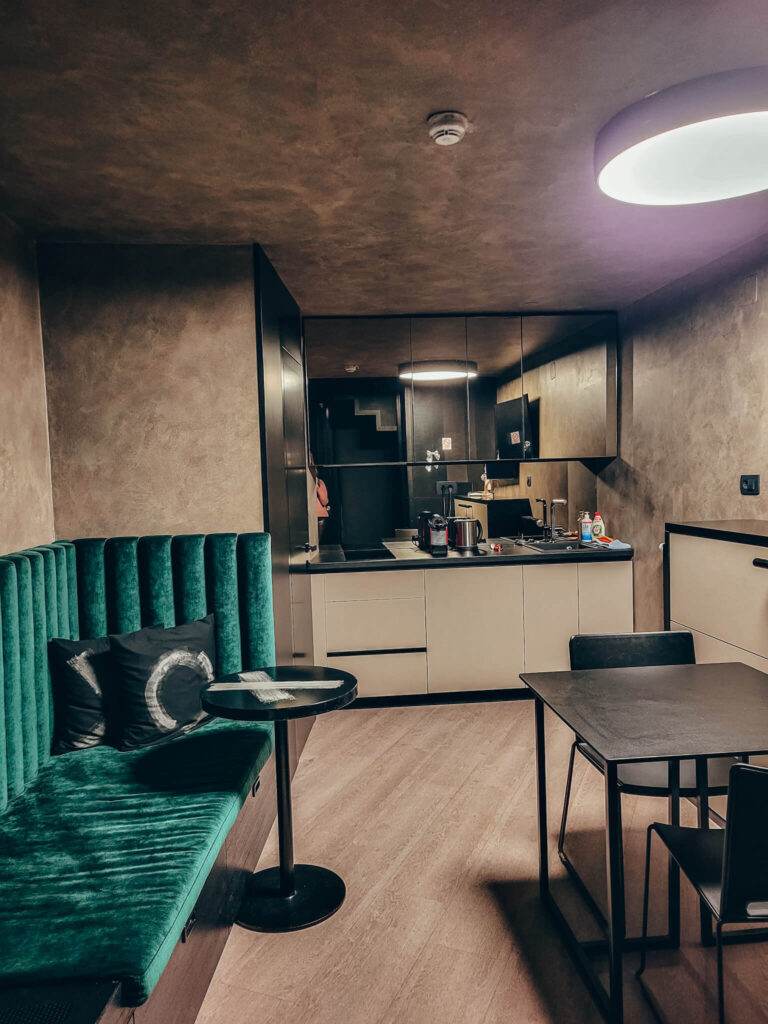
In Zagreb, I stayed in two places. Court 5 Apartments are small but very modern and have everything needed. The apartment is in a great location (just next to the main street, Ilica, yet silent), and I really recommend it for a comfortable visit to Zagreb.
Hotel Central is partially renovated (and partially still in older style) to stay for 1-2 nights because of its good location if you arrive late by train; it’s just next to the train station. I’ve stayed there for one night after my train trip from Budapest.
Hotel Dubrovnik is a popular, almost iconic hotel in the very centre, just on the main city square.
Places in Dubrovnik
When I stayed in Dubrovnik longer, I rented a room from a lady who reached out to tourists at the bus station. It wasn’t the best place, but at least the price was reasonable, and the lady was very nice. She would prepare me coffee in the mornings and talk with me so that I could practise my Croatian.
For sure, Dubrovnik is a city with more hotels than other small coastal towns. Look at Rixos Premium Dubrovnik or Boutique Hotel Porto.
If you are looking to stay in an apartment, check out this one for a great stylish apartment with a view or this one for a bit more standard but also looking nice with a good rating.
Zagreb or Dubrovnik: What to see and do
Zagreb
Zagreb is a typical Central-Eastern European capital, perfect for a city-break visit.
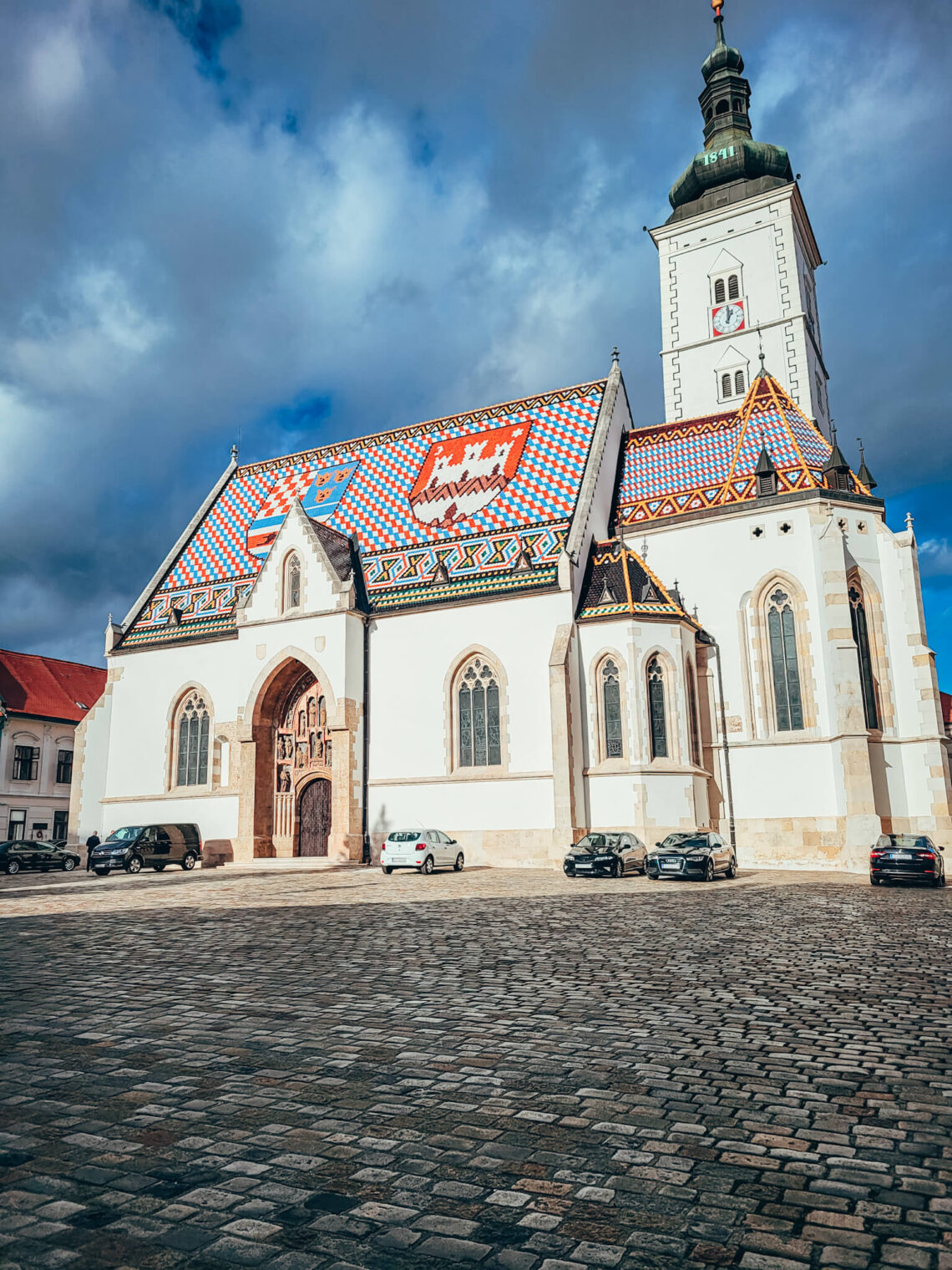
It’s divided into two city parts: Lower Town and Upper Town. In Upper Town, you can find many museums, charming streets, the Tower, the Croatian parliament and other governmental sites, Saint Mark’s Church, and Zagreb Cathedral. In Lower Town you find Ban Jelačić Square or buildings of the Art Pavilion or the National Croatian Theatre.
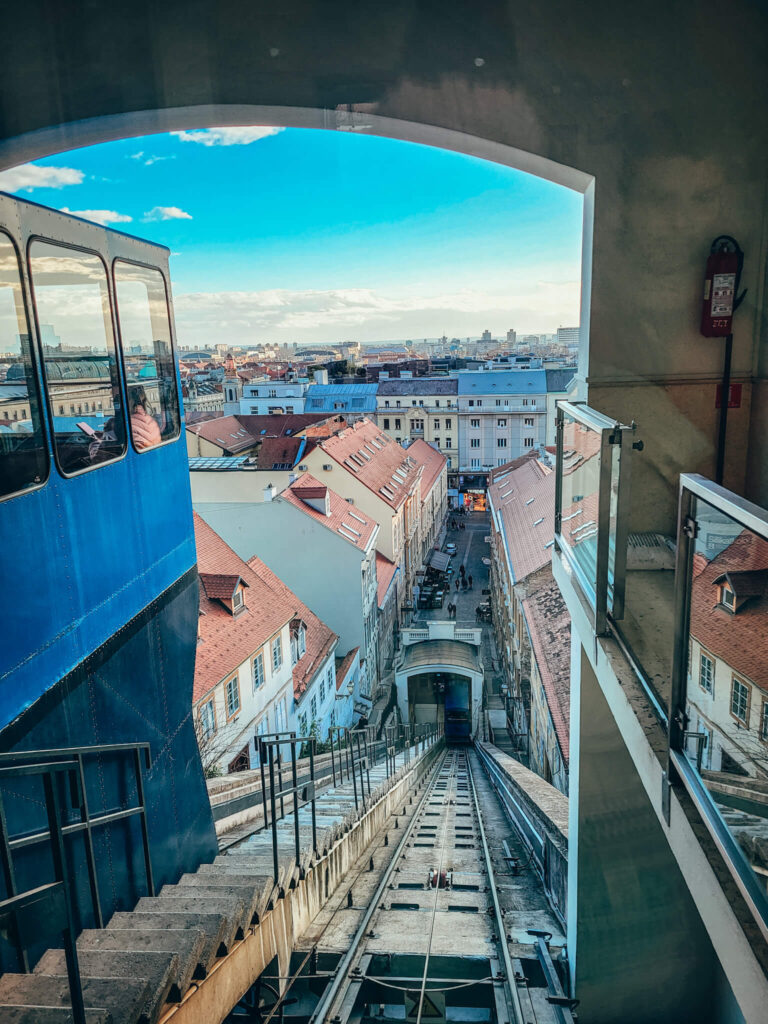
‘In between’ both parts there is Dolac Market and Funicular, called the shortest funicular in the world.
Zagreb is quite a green city; there are many smaller and bigger parks. It’s also said to have the biggest number of museums per capita, so you will not be bored even if you stay longer. There are also many interesting, less typical museums. e.g., Selfie, Mushrooms or Broken Relationships.
There are also endless cafes to stop by for a coffee, both ‘standard’ ones as those with modern speciality coffee, and many good restaurants.
Dubrovnik
Dubrovnik has more Mediterranean, seaside and beach vibe. Old Town is surrounded by the sea.
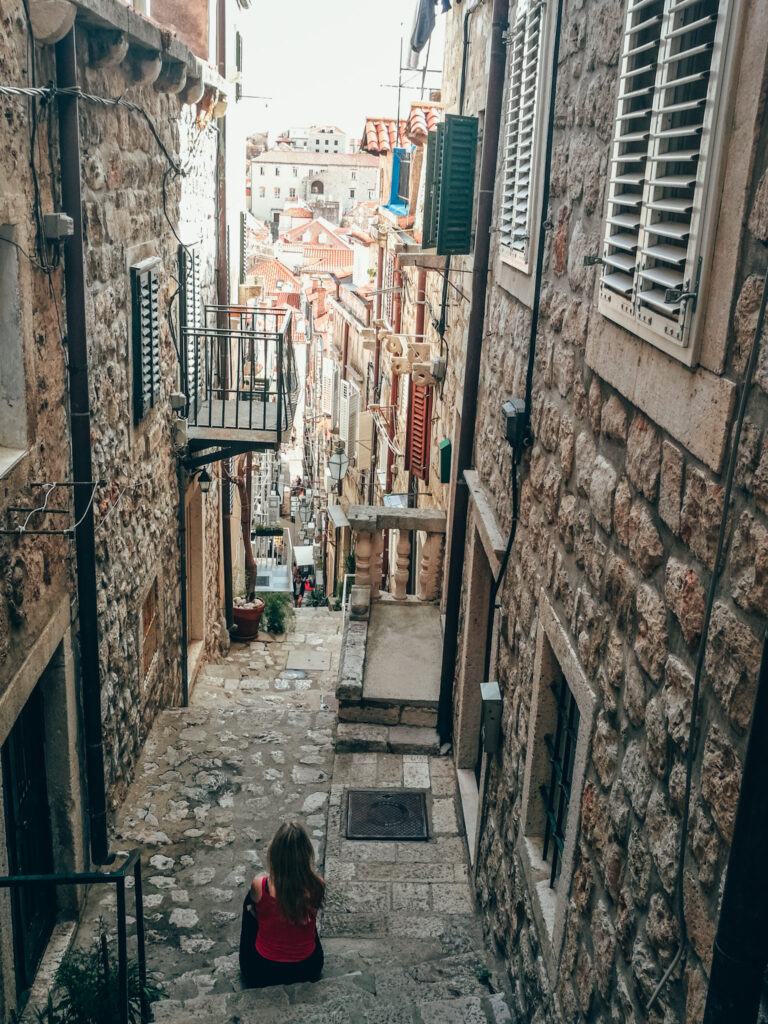
The town is called ‘Pearl of the Adriatic’. Dubrovnik’s Old Town is a must-see and the biggest tourist attraction. When there, walk on the main squares, but also turn to the small streets. A walk on the city walls is another great attraction. Just don’t do it in the middle of the day during the biggest heat.
You can also take the Dubrovnik cable car to the Hill Srđ to get breathtaking views or the boat to Lokrum Island for a little bit more peace.
From Dubrovnik, you can also go to smaller seaside towns like Cavtat.
Vibe in Zagreb vs. Dubrovnik
Probably you already have some idea what vibe and atmosphere you can expect in both cities. Zagreb is a big capital city, and you can feel it in its vibe. Although I would say it’s calmer than most European capitals are.
Because of geography and history, you can find some touches from Hungary or Austria, for example, in local food.
Dubrovnik has a different vibe; it’s more touristic and less local. Also, it has a typical Mediterranean vibe, architecture, beautiful sea views and beaches. And, of course, more seafood in restaurants. It’s also quite elegant. If I were to compare it with any other touristic place in other countries, it would probably be Santorini’s vibe.
In one sentence, I would say it’s a more ‘holidays’ atmosphere in Dubrovnik, while Zagreb has a more ‘city-break’ atmosphere.
In Zagreb, you need more time. And when it comes to Dubrovnik, I think a full day of visiting can be enough to see and feel it.
So, as you see, they are two very different destinations. The good news is that, even if they are not too close to each other, it’s not difficult to travel between them.
Dubrovnik or Split?
I hope explanations and descriptions will make it easier for you to decide which city is more for you and which one you should visit first.
However, as I already suggested, they are so different that it would be best to combine seeing both of them. You can travel from Zagreb to Dubrovnik by car, bus, or plane. Plane is the easiest and quickest here.
I think the more adequate question would be, ‘ which one is better, Split or Dubrovnik’?. Of course, they are still different, but they share more common characteristics. Both are at the coast, both are in Dalmatia, and both have UNESCO World Heritage Site monuments (in Split there is the famous Diocletian’s Palace). From those two, I prefer Split as a ‘place to stay’, but it’s again just a personal view. The good news is that Split and Dubrovnik are close enough to see both of them during one journey. Here, you can read how to travel between them.
One thing I’m sure about. Whichever you choose, you will enjoy your stay very much.
Check out more from the Croatian section of the blog:

Aleksandra
Aleksandra is a travel blogger from Poland who specializes in European destinations. She is Master in Croatian and Serbian studies (philology) so Croatia and whole Balkan region is very important on her travel routes. Aleksandra is close to visiting all countries in Europe, and many countries she has visited multiple times. She is also crazy sport supporter and sport volunteer participating in biggest sports events for over 10 years now (for example, Aleksandra was a volunteer during Paris Olympics).


You May Also Like

Where to go in Croatia: My favourite places

From Zagreb to Belgrade: How to Travel
